


Peru is one of the best countries to learn about the legacy of the Incas, one of the most important civilizations to inhabit South America before the arrival of the Spanish.
Machu Picchu, the ancient Inca citadel and one of the Seven Wonders of the Modern World, is surely one of the first images that comes to mind when you think about visiting the country.
Peru and the Inca legacy
But I want to tell you that, in addition to Machu Picchu, Peru has many other archaeological sites that are also worth visiting. They offer a glimpse into different aspects of Inca history.
I’ve had the opportunity to travel to this incredible country more than once. I want to take this opportunity to tell you about some of the historical sites I’ve personally visited and that, in my opinion, are worth including in a trip to Peru.
Sacred Valley
I want to start with the Sacred Valley, a region in the Andes that stretches between Cusco and Machu Picchu and was one of the most important areas of the Inca Empire.
But why start talking about this place?
Well, this valley was very important for the Incas, especially for the existence of fertile lands where they grew corn, potatoes and other crops, and the Urubamba River, which runs through the whole valley and provided water to the different settlements.
That’s why many of the main archeological sites are concentrated in this same area. Here they built villages, built the famous agricultural terraces that still exist today. Built temples dedicated to their gods and left behind ceremonial centers that can be visited today.
If your intention is to learn about Inca culture and heritage, I suggest considering the Sacred Valley as a central part of your trip, starting with the city of Cusco, the former capital of the empire, which I’ll tell you about next.
Cusco
If there’s one city in Peru where Inca history is still present on every corner, it’s Cusco. And if we add to that the fact that we’ll also witness the legacy of the Spanish colonial era, we’ll find a very interesting mix to explore.
Cusco was the ancient capital of the Inca Empire. Even today, it’s one of the best places to see how both eras coexist in the same space. The Spanish built churches, convents, and mansions on top of ancient Inca structures. You won’t be surprised to find enormous stone walls supporting colonial buildings.
The best example is Qorikancha, which was one of the most important temples of the empire and upon whose foundations the Convent of Santo Domingo was built.
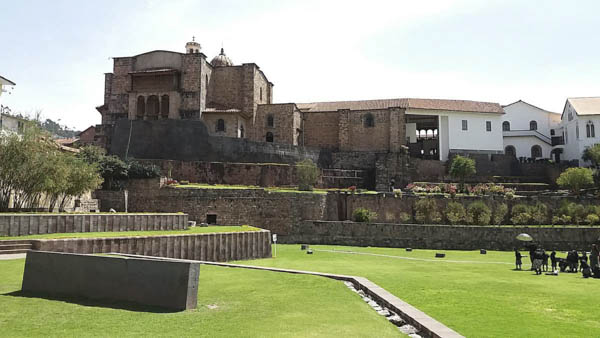
But that’s not all. Other things you can do in Cusco include visiting the Plaza de Armas, where you’ll find the Cathedral and the Church of the Society of Jesus. As you stroll along streets like Hatun Rumiyoc, you might come across the famous Twelve-Angled Stone, a testament to the level of precision achieved by Inca architecture.
I recommend spending at least a couple of days in Cusco. Not only to explore the city at a leisurely pace, but also to acclimatize to the 3,400 meters of altitude. Something you’ll appreciate if you plan to visit other places in the area later.
Furthermore, use it as a base to explore several of the archaeological sites. I’m about to show you, because many of the most important ones are very close to the city.
How to get to Cusco
The most common way to get to Cusco from Lima is by plane. The flight takes approximately 1 hour and 20 minutes., The fastest option if you want to make the most of your time during your trip.
It’s also possible to travel by bus from Lima, although the journey is much longer and can take around 20 hours. However, if you’re arriving from a closer city, such as Arequipa, the bus trip is more reasonable.
Once in Cusco, you can explore most of the attractions in the historic center on foot. And to visit more distant places, like the ones I’ll mention shortly, you’ll find minivans, shared taxis, and tours departing from the city.
Sacsayhuaman
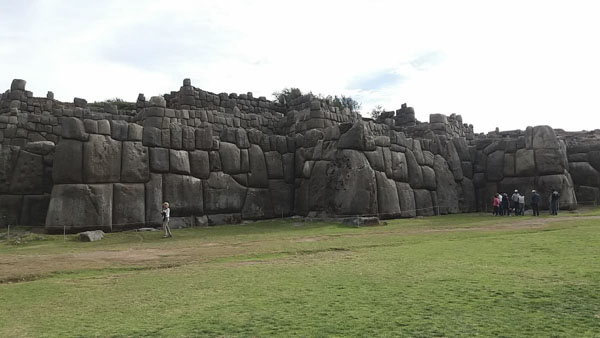
A few kilometers from Cusco, located high above the city, is Sacsayhuaman. One of the best examples of Inca architecture, not so much for its monumental scale, but for its engineering.
Initially, it was believed to be a fortress, given its strategic location, which allowed control over access to the city. However, it was later discovered that it also served religious and ceremonial functions. In fact, the Inti Raymi, the Festival of the Sun, one of Cusco’s most important celebrations, is still celebrated there today.
Furthermore, its enormous walls, formed by stone blocks fitted together with surgical precision, also demonstrate the importance of the complex to the Incas.
How to get to Sacsayhuaman
Since it is located about 2 km from the center of Cusco, it is possible to get there either on foot, by taxi or on a tour that includes other archaeological sites near the city.
Pisac
One of my favorites. It’s built on the slopes of a mountain and one of its main attractions is the enormous agricultural terraces that still occupy a good part of the hillside.
These terraces allowed the Incas to make use of land that, due to its incline, was not easy to cultivate. There they could produce mainly corn, potatoes, and other crops. While the stepped structure also helped control soil erosion and better manage a resource like water.
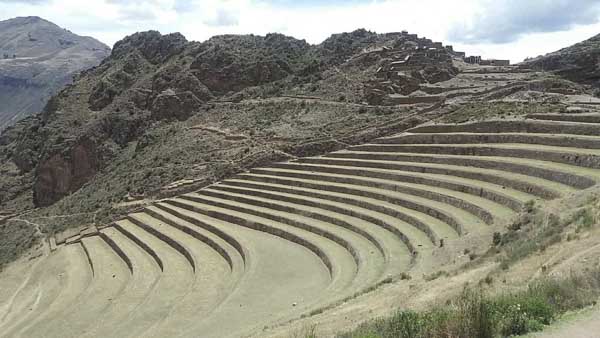
The stone constructions and the paths that connect the different areas of the complex show how they adapted the entire site to a rather uneven terrain.
In addition to the archaeological site, Pisac is known for its picturesque artisan market, where you’ll find textiles, handicrafts, paintings, and various other typical products of the region.
Therefore, if you visit Pisac, you can easily combine both. Exploring the ruins first, and then going down to the town to visit the market. You can do it on your own or as part of one of the tours that explore the Sacred Valley.
How to get to Pisac
It’s about 30 km from Cusco. You can easily get there by bus from the city, or visit it as part of an organized tour of the Sacred Valley.
Do Read: Why Lake Titicaca Is A Special Place In South America
Ollantaytambo
Another classic archaeological site to visit in the Sacred Valley is the Inca city of Ollantaytambo.
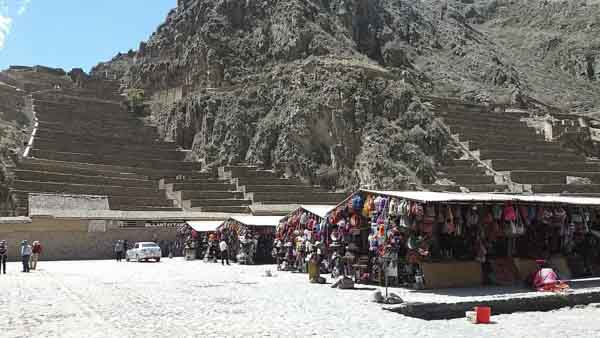
The most remarkable thing about this place is that it still preserves much of its ancient layout. The streets, walls, and water channels that flow down from the mountains are still part of the present-day town and date back to the Inca era.
At the top is the archaeological complex, where, again, as in Pisac, the terraces and some stone structures stand out, always accompanied by beautiful views of the valley and a few colorful llamas.
How to get to Ollantaytambo
Ollantaytambo is about two hours from Cusco by road. You can get there by bus from the city center, minivans, or an organized tour. It’s also one of the main departure points for the train to Machu Picchu.
Machu Picchu, Peru
It’s undoubtedly the historical site everyone wants to visit in Peru. If there’s one place that embodies the Inca heritage, it’s Machu Picchu.
The ancient citadel is unique in that it was built amidst the mountains, in a difficult-to-access environment, isolated from other settlements. This is the main reason why it has survived the passage of time so well.
The most spectacular thing for me is the first view we have upon arriving at the complex from Aguas Calientes, the town where we spend the night before climbing to Machu Picchu in the morning.
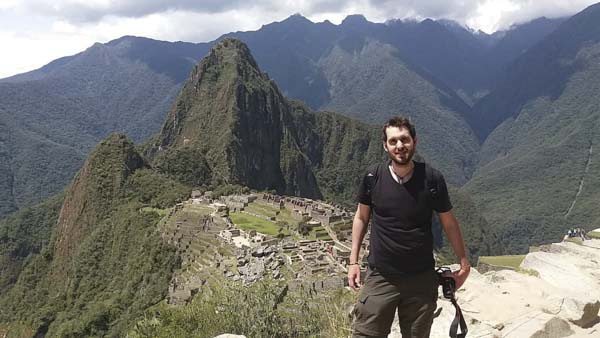
The citadel’s remains are arranged as they supposedly were hundreds of years ago, with the famous Machu Picchu mountain in the background, lending a mystical touch to the site.
The visit consists of learning how the city was organized. Observing the stone constructions, what were once the dwellings, the temples, the agricultural terraces, irrigation canals, and how they managed to adapt to such a challenging terrain.
if you want to explore more than just the ruins, you can also take one of the two most popular mini-trek: climbing Huayna Picchu or Machu Picchu Mountain, the summit offering one of the best views of the entire citadel.
A few years ago, there was more freedom to explore the site. But with the increase in tourists, mandatory routes and other restrictions were implemented to try to protect the site. So today visits are more limited than before.
In fact, in recent years, some rumors have surfaced that it might lose its status as a modern wonder due to problems with the management and conservation of the complex.
But, despite the tourist saturation, it remains an essential visit if you want to learn about the history of the Inca Empire.
How to get to Machu Picchu
From Cusco, you can take the train to Aguas Calientes (Machu Picchu Pueblo). From there walk or take a bus to the entrance of the citadel.
There are also multi-day trekking options. Such as the Inca Trail, or a more economical alternative like taking a minivan to a hydroelectric plant and from there walk for about 2 or 3 hours following the train tracks to Aguas Calientes.
Long Before the Spanish and the Incas
Peru’s cultural heritage is not limited to the Incas or the Spanish colonial period. For thousands of years, different civilizations developed in this territory, each with its own customs, architecture, and forms of organization.
I’m only going to mention a few of them. Both to avoid making the article too long and because I didn’t have the chance to visit them in person. If you have the time, I think it’s a good idea to include them in your Peru Itinerary.
- Caral: located north of Lima, it was the main settlement of the Caral-Supe civilization, which flourished around 5,000 years ago. It has large structures and pyramids that prove an organized society existed in this area long before the Incas.
- The Nazca Lines, created by the Nazca culture between the 2nd century BC and the 6th century AD. There are figures drawn on the desert floor, representing animals and other geometric shapes, and can be best appreciated from a helicopter flight.
- On the northern coast, we find Chan Chan, the ancient capital of the Chimu civilization. Built primarily of adobe, it grew into a huge city before being incorporated into the Inca Empire.
- Chavín de Huántar, in Ancash. It was an important ceremonial center of the Chavín culture, which developed long before the Inca Empire.
Getting around Peru
Peru is a large country with very uneven terrain. So for traveling long distances, flying is the most practical option. Major cities like Lima, Cusco, Arequipa, and Huaraz have airports. You can reach any of these destinations in just a few hours.
Buses are another popular option and connect virtually all tourist cities. For example, to travel through the south of the country, common routes include Lima, Paracas, Arequipa, Puno, and Cusco.
For shorter trips, minivans are also available. These typically cover transportation within a single region, such as Cusco and the Sacred Valley.
The train has very limited use. Only useful for tourists on the route from Ollantaytambo to Aguas Calientes (where Machu Picchu is located).
If you’re going to travel by bus, I recommend choosing reputable companies like Cruz del Sur, Oltursa, Movil Bus, or Civa. When possible, avoid nighttime trips on mountain routes. The road conditions and the sometimes reckless driving can make you feel a bit uneasy during the journey.
Is it safe to travel in Peru?
Generally speaking, you can travel in Peru without major problems. But I wouldn’t say it’s a country where you should completely relax. As with many destinations in Latin America, you should take precautions, especially in large cities.
Typical problems you might encounter as a tourist are robberies and thefts. Especially in crowded places or large cities, particularly in Lima, and on the outskirts of the historic centers of Cusco, Arequipa, and other cities.
Take special care with your phone and backpack. Avoid walking alone in deserted areas at night. It’s also advisable to use taxis recommended by your hotel or ride-hailing apps like Uber.
Final Thoughts
While I focused on telling you about the Inca legacy in Peru, the country was also home to many other civilizations throughout its history. Each of which left its own constructions and customs.
Added to this is what occurred during and after the arrival of the Spanish. Resulting in a blend of cultures that can still be seen today in the cities, architecture, cuisine, and traditions.
Having visited several of these places, I can say with complete certainty that one of Peru’s greatest strengths is precisely the wealth of evidence it still preserves about the societies that once inhabited its territory.
Machu Picchu is the most famous site of all. But, there are many other places that offer insights into different aspects of Peru’s pre-Hispanic history. Therefore, if you are planning a trip to the country, I recommend making time to visit some of them.
Author Bio
Fernando Caino is an Argentinian travel blogger who spent over a year independently traveling the legendary Silk Road, from China to Turkey. On his blog, The prism of Fer he shares his experiences from this adventure, along with guides and tips for other destinations around the world.