



During one of our visits to the sacred Sri Mookambika Temple at Kollur, Karnataka, my wife Sreelakshmi and I came to know that the revered Sridhara Ashram at Varadahalli, near Sagara, could be reached directly by bus – about 80 kilometres away. Having long cherished a desire to visit the abode of Sri Sridhara Swamiji, whose life and teachings had deeply inspired us, we decided to make the pilgrimage during our October 2024 visit to Kollur.

Rivers, Forests, Stillness: A Pilgrimage to Varadahalli
The early morning bus ride from Kollur turned out to be an experience in itself. Packed to the brim with devotees, pilgrims, and villagers, it was as lively as it was challenging. With no seats available initially, we swayed and balanced ourselves through every sharp bend of the winding Western Ghats, laughing at our own helpless “dance” as the bus navigated the hilly terrain.
Midway, the bus halted at another celebrated shrine of the Malnad region – the Sigandur Chowdeshwari Temple. Nestled amidst dense greenery and overlooking the serene backwaters of the Sharavathi River, the temple is famed for its presiding deity, Goddess Chowdeshwari, regarded as a fierce yet compassionate guardian of justice. Pilgrims from across Karnataka throng here, believing that appeals made to the Goddess are never left unheard.
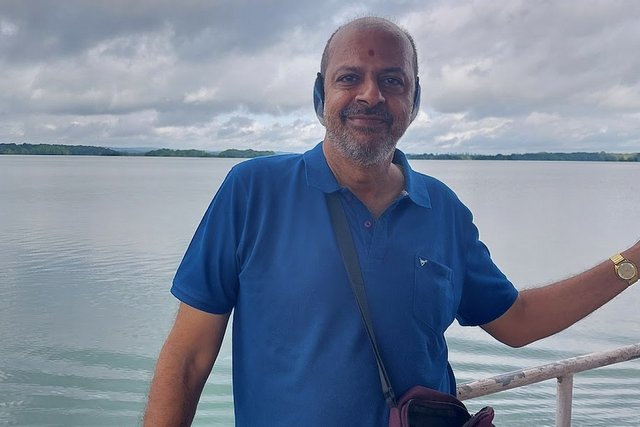
From Sigandur, the adventure continued as the bus was driven onto a jungar – a motorized ferry that carried both passengers and vehicles across the vast, ocean-like expanse of the Sharavathi River. The sight was spectacular: shimmering waters stretching endlessly under the morning sun, flanked by forested hills on three sides. Once across, the route wound through the Sharavathi Valley Wildlife Sanctuary, where the road meandered amid lush evergreen forests, the air filled with birdsong and the fragrance of wild blooms.
Do Read: Sri Vishwanath Temple, BHU Varanasi – A Model Temple
By the time the bus rolled into Sagara around 10 a.m., after more than four hours of mountain roads, temples, and river crossings, we felt as though we had already received a benediction – the journey itself had been a pilgrimage, preparing us inwardly for the serene peace awaiting us at Varadahalli’s Sridhara Ashram.
Varadahalli
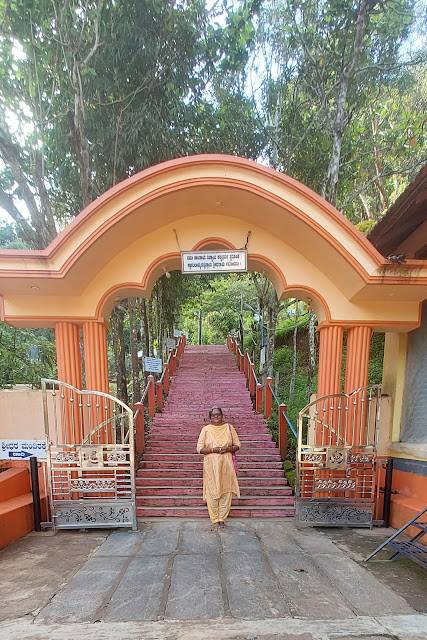
As the evening sun dipped behind the hills, casting a golden hue over the landscape, we finally made our way towards Sri Sridhara Ashram. Nestled amidst the lush, emerald folds of the Western Ghats, the ashram radiates serenity and sanctity.
The small village of Varadahalli, about six kilometres from Sagara, greeted us with its pristine air, chirping birds, and a deep, sacred stillness. The climb to the ashram itself felt like a spiritual ascent.
Reaching the gates of Sridhara Ashram, we were immediately drawn into an atmosphere of peace, simplicity, and grace. As soon as we entered, we were offered a kashaya – a warm herbal drink – which instantly refreshed us and seemed to welcome us into the ashram’s gentle rhythm. A sense of timelessness pervaded the place, as if we had entered an entirely different dimension sculpted by tapas, silence, and the divine presence of Swamiji.
Life of Sri Sridhara Swamiji
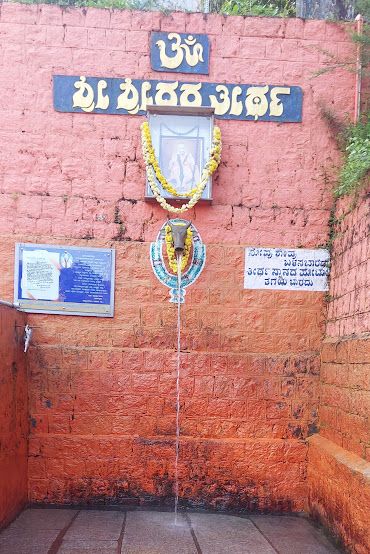
To understand the power of this place, one must briefly recall the life of the saint who sanctified it. Born in 1908 in a humble family in Karnataka, Sri Sridhara Swamiji renounced worldly life early and took to intense spiritual sadhana. He wandered across India, visiting holy places, meeting saints, and absorbing the teachings of the scriptures. Finally, drawn by divine will, he settled in the forested hills of Varadahalli in the 1950s.
Here, Swamiji lived a life of mauna (silence), tapas, and deep contemplation. He rarely spoke, yet his mere presence transformed seekers and devotees. His compassion, wisdom, and magnetic personality drew thousands to Varadahalli. Without establishing a formal organization or preaching doctrine, he inspired a silent revolution in countless hearts.
He attained mahasamadhi in 1973, but his presence still pervades every stone, tree, and prayer of the ashram.
The Sacred Spring – Eternal Water Source
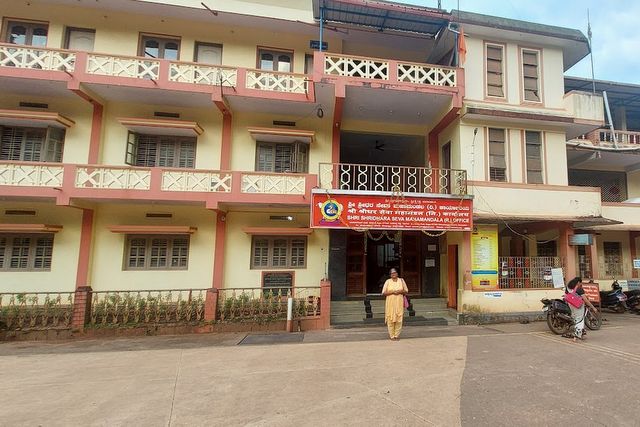
Perhaps the most astonishing and miraculous feature of the ashram is the perennial spring of water flowing from the forested hilltop. Legend has it that Sri Sridhara Swamiji himself discovered this source and, through his tapas, ensured it would never run dry. Even during severe droughts, the stream flows ceaselessly, offering cool, sweet water.
Devotees regard this water as Tirtha, and indeed, it tastes like nectar. We cupped our hands and drank deeply – feeling as though every cell in our body had been cleansed. Many pilgrims collect it to carry home, believing in its healing and spiritual potency.
It is rare to see such a pure spring flowing so gracefully, murmuring the mantras of the forest and the blessings of the Guru.
The Sacred Samadhi Mandir
The spiritual heart of the ashram is the Samadhi Mandir of Swamiji, located at the top of the hill. The climb involves hundreds of steps, but each feels light when taken with devotion. Along the way, stone plaques display Swamiji’s terse, powerful, and grace-filled teachings.
At the summit lies the simple yet deeply sanctified shrine housing the holy Samadhi. It radiates a rare peace. Devotees sit in silence – some meditating, others whispering prayers. Time seems to stand still. We too sat in awe, offering our heartfelt pranams and experiencing a divine stillness within. After meditating there for some time, Sreelakshmi began to sing a couple of her favourite devotional songs in Tamil. The soft notes of her voice floated gently through the tranquil air, blending perfectly with the sacred atmosphere. Tamil-knowing pilgrims, their faces lit with beautiful smiles, watched her with joy and reverence, adding a quiet, human warmth to that moment of divine serenity.
The Veda Patashala – Nurturing the Sacred Flame
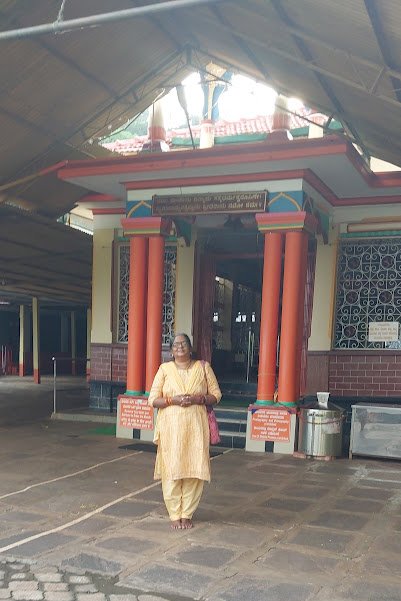
A unique and noble activity of the ashram is the Veda Patashala, where young students are trained in the ancient oral tradition of chanting the Vedas. The sound of these chants, resonating across the hills, is mesmerizing – as if nature itself pauses to listen.
We visited the Patashala where young brahmacharis, clad in traditional attire, were immersed in rhythmic chanting of the Rig, Yajur, and Sama Vedas. The acharyas guiding them exuded dedication and humility. We learned that the Patashala not only imparts scriptural knowledge but also instills discipline, devotion, and values.
In a world veering toward digital noise, this living center of Vedic wisdom feels like a flickering yet steady flame of Bharatiya parampara.
Another integral aspect of the ashram is the Goshala, where cows are lovingly tended. Swamiji revered Gau Mata, and that tradition continues under the care of the ashram authorities. We spent peaceful moments at the Goshala, watching the gentle creatures being cared for by volunteers.
Here, cows are not merely fed – they are respected and worshipped. Their milk is used for daily pujas and prasadam preparation. The ashram’s spiritual ecology feels complete with its tranquil presence.
Daily Ashram Life at Varadahalli – Silence, Simplicity, Seva
The ashram’s daily routine mirrors the principles Swamiji embodied – mauna (silence), dhyana (meditation), seva (service), and bhakti (devotion).
The day begins early with Vedic chanting and puja at the Samadhi Mandir. Simple, satvic meals are served as prasadam in the annadana hall, and silence during meals is encouraged.
Seva here is considered sadhana. Visitors help with cleaning, gardening, serving food, or tending cows – all in humility. No one is asked, yet everyone participates.
Evenings are reserved for bhajans and quiet reflection. We noticed people from all walks of life – householders, sanyasis, students, foreigners – sitting together, united in the silent presence of the Master.
Personal Reflections
For us, the visit to Sridhara Ashram was not just a journey; it was a soul encounter. My wife Sreelakshmi was deeply moved by the quiet dignity of the women devotees managing the ashram office, goshala, and kitchen – their faces glowing with devotion, their hands busy in karma yoga. She softly said, “In this beautiful place, I feel I am in the lap of the Divine.” That simple utterance perhaps captures the profound stillness this sacred hill instils in every visitor.
With the gentle nod of the smiling pujari at the Samadhi Mandir, she began to sing EntaroMahanubhavulu… – her voice merging with the tranquil evening air.
We left with a feeling of inner cleansing. The noises of the outer world had dimmed, and something luminous had taken birth within – a renewed respect for silence, simplicity, and the path of grace.
A Living Light
What touched us most was that even after fifty years of Swamiji’s Mahasamadhi, the ashram remains vibrant with his spirit. No large publicity, no fundraising, no commercialization – yet seekers from all over the world continue to come, drawn by a mysterious inner call.
This is the greatness of saints like Sridhara Swamiji – they build not empires, but inner sanctuaries, both within themselves and in the hearts of others.
Sridhara Ashram is not a place to “see.” It is a presence to feel. It calls only those ready to listen to silence and walk the path of simplicity and surrender.
As we drove away from the ashram, the last glimpse of the hill lingered in our eyes – but more than that, a quiet light glowed within.
We offer our pranams to the sacred land, to Sridhara Swamiji, and to all the silent servants of the Divine who make this ashram what it is – a living lamp of spiritual India.
Quotable Quotes of Sri Sridhara Swamiji, Varadahalli
- Speak less. Think less. Observe more. Realize more
- To be silent is to listen to the voice of God
- What is destined will happen. Do your duty without attachment
- Real tapas is not in the forest, but in burning the ego within
- Surrender is strength. Humility is the highest wisdom
- If you want peace, first give up the desire to control others
- Grace flows naturally where the ego is absent
- Don’t seek miracles. Seek purity. That itself is the greatest miracle
- A single moment of true silence is greater than a thousand spoken prayers
- Guru is not a person outside. The real Guru is the light within
- He who serves silently and sincerely reaches the Lord faster than he who debates loudly
- Your breath is the real mantra. Watch it. Merge into it. Be free
- Don’t waste time in judgment of others. Use it to cleanse your own heart
- Remember – everything that comes will go. Only the Self remains
- God tests not to punish, but to polish
Pilgrim Information
Website: sridharashrama.org
Location: Varadahalli, 6 km from Sagara town, Karnataka.
Accommodation: Limited guest rooms available on prior request.
Dress code: Modest, traditional clothing preferred.
Language: Kannada is widely spoken, but volunteers can help with Hindi/English.
Ashram Timings: Open daily; best time to visit is early morning to witness sunrise prayers and climb to the Samadhi Mandir.
How to Reach: Sagara is well-connected by bus and train from Shivamogga, Bengaluru, Kollur, and Mangaluru.
You cal also visit Ikkeri from here.
This is a guest post by Pradeep Krishnan.

Pradeep Krishnan, a Commerce and Law graduate with a post-graduate diploma in journalism, served in an Indian Government Department for 36 years. A passionate writer, for the past three decades, he has been contributing articles to several periodicals and online portals of repute, published in English, Hindi, and Malayalam. He has published two books, one each in English and Malayalam.





Aesthetic writing…. very inspiring 🙏🙏🙏
Beautifully written! The way you’ve connected rivers, forests, and spirituality at Varadahalli really highlights how deeply intertwined nature and faith are in India. The serene setting of the Western Ghats and the legacy of Sri Sridhara Swamiji make it feel like more than just a destination—it’s truly a place for inner reflection. Loved how the narrative brings out both the ecological and spiritual significance of such pilgrimage sites. Makes one want to experience the calm and divinity of Varadahalli firsthand
This is a beautifully written and insightful post! I love how you blend vivid descriptions of the rivers, forests, and spiritual vibe of Varadahalli with practical travel details. It makes the place feel alive and very inviting. The photos and storytelling really capture the peaceful essence of the pilgrimage while also inspiring adventure. A great read for anyone planning a soulful nature escape!
Excellent post! The way you’ve explained the topic is clear and easy to understand.
Beautifully narrated pilgrimage to Varadahalli that captures the essence of silence, devotion, and inner transformation. The descriptions of the Sharavathi river crossing, Sigandur temple, and the serene ashram life truly transport the reader into the Western Ghats. Sridhara Swamiji’s teachings on simplicity and surrender feel timeless and deeply relevant in today’s fast-paced world. Thank you for sharing this soulful experience. A truly calming and reflective read.
This is the perfect example of ‘conscious travel.’ After seeing how many hill stations are struggling with over-tourism, reading about a place that prioritizes mauna (silence) and seva (service) is incredibly refreshing. The ‘Sacred Spring’ discovery feels like a metaphor for what we should all be seeking in our travels – a pure, untainted source of restoration. Thank you for sharing this sacred ascent with us.
This was a beautiful and soul-stirring read. Your descriptions of the forests, river crossings, and serene atmosphere of Varadahalli made me feel as if I were accompanying you on the pilgrimage. I especially enjoyed learning about Sri Sridhara Swamiji and the simplicity of ashram life. The blend of spirituality, nature, and personal reflections makes this post both inspiring and informative. Thank you for sharing such a heartfelt journey and introducing readers to this peaceful corner of Karnataka.