



On a boat ride on the Ganga River at Varanasi, I sat nostalgically observing the ghats and the vibrant life on them. I have been visiting Varanasi since childhood and have vivid memories of Ganga, its ghats, its boat rides and the air of divinity that they all carry. This time, the riverfront has changed dramatically near Manikarnika ghat as the new path to Kashi Vishwanath temple has been laid. Massive staircase leads to a majestic gateway. It promised to provide a direct access to Vishwanath temple from Ganga, enabling people to take a dip and do the darshan, without passing through the narrow lanes that were earlier located between the river and the temple. The project is popularly known as Kashi Vishwanath Corridor.

Visually, it is a modern-day stamp in the middle of an old city best known for its narrow gullies leading to the ghats of Ganga on one end and the main road leading to the rest of the city. In a way these gullies are as much a cultural heritage of Varanasi as the ghats and innumerable temples located in and around the ghats. To me, they are like the visual version of Indian scriptures. Each narrow street is a story itself that leads you to another story, a detour will take you to another story but there is a path to return to the original story. They are maze that you need to get to lose yourself in.
Kashi Vishwanath Corridor project was launched with much fanfare towards the end of 2021. The government and the authorities projected it as a major development project that would improve the visitor experience in Varanasi. It did attract its own share of criticism that came for multiple reasons. The loudest ones being about the removal of many ancient temples to clear land for the project. So, this time when I was spending a couple of months in Varanasi, I spoke a range of people and sought their views on the project, and the opinion is divided, right in the middle.
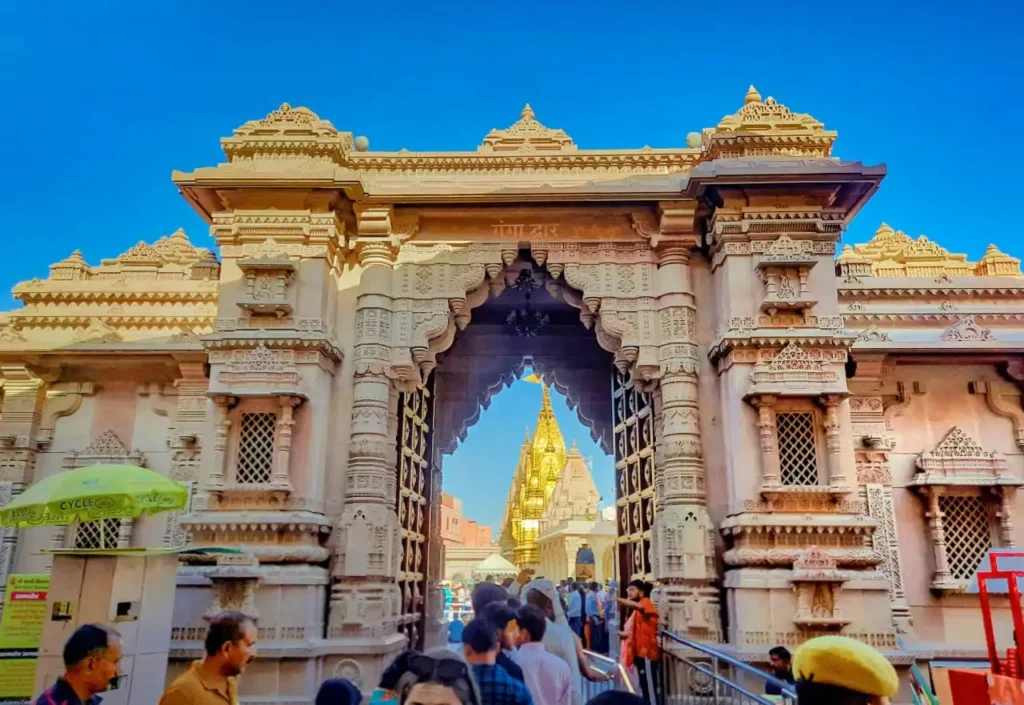 Those who have visited the city only after the inauguration of the Kashi Vishwanath Corridor project like it. And, yes, there are many more tourists visiting the sacred city after the corridor came up and brought a fresh spotlight on the city that was always on top of the wish list of any devout Hindu. I must credit this campaign for bringing in the younger, social media savvy younger generation to the city. Today you can see them on ghats, on boats, at famous eateries and in temples shooting reels and further adding to the euphoria of visiting Kashi.
However, when it comes to the people who have visited it earlier, and see the clear difference between before and after, their views are ambivalent. They like the clean and open environment of the newly built corridor leading to the temple. Remember the temple has not really been touched. It remains as it was built by Malwa queen Ahilya Bai Holkar in 1780 CE and adorned with gold by Mahaja Ranjit Singh of Punjab in 1835 CE. The area surrounding it has been cleared creating a huge courtyard around it and two other similar courtyards leading to it from Ganga. They miss the informality of the earlier visit. Since the 1990s the security checks were introduced. When mobile phones became prevalent, they were not allowed inside the temple but that was it. There were no stringent security checks. You could visit the temple through the narrow Vishwanath Gully, enter through the small gate, pray or do abhishek, visit the smaller temples around, visit Annapurna temple and stay as long as you wished or as long as the crowds allowed you to. Now, you can visit it from 3 sides, from the Vishwanath Gully as in the past, from the Ganga side through the newly built corridor gateways and through the gate no 4 from the main road near Bansphatak.
New facilities include buying VIP tickets, called Sugam darshan or easy darshan, that allow you to escape the long queues for a fee, which at the time of writing is Rs 300/-. This includes a Shastri as your guide, a small box of prasad and locker facility for electronic items. Foreigners pay Rs 600/- for the same and additionally get an Anga-vastram after their passport verification. There is wheelchair facility available for the elderly and those with any disabilities. As you walk on the road from Gowdoliya towards Bansphatak, you see many wheelchairs and wheelchair bound devotees being helped with the darshan. This is really helpful as walking through the narrow gully was not easy for elderly or disabled.
People also remember that many temples were not being taken care of, they were not clean and many not worshipped. A lot of filth has been cleaned and who does not like cleanliness. At the same time, no one likes to be seen with suspicion when one is visiting the lord of the world. The security checks and long queues are unwelcome and irritating. The most despised fact is that you do not get more 1-2 seconds for the darshan. A male and a female staff is standing on stools just to push the devotees. This is disappointing to say the least for people who have travelled all the way for this darshan. They also miss the fact that you are no longer allowed to sit in the premises despite the fact that there is much more space available for people to sit. In practice, you can only have a quick glance of the Shivalinga in general. There is a facility to offer Pujas and do Rudrabhisheks, the details of which are listed on the website. Most of these need to be booked in advance based on available slots. However, if I want to simply sit and meditate or spend some time in the vicinity of the temple, it is difficult.
Finally, what do Kashi Vasis, the residents of city of Varanasi feel about this major change that has impacted the city tourism statistics dramatically. They are also ambivalent when it comes to their views on newly built corridor. Increased tourists mean in general more money in the hands of the locals, specially when the pilgrim economy is more of less in their hands with big hotels being away from the nerve center of activities – the ghats. They also appreciate the government for the improved infrastructure in the city, especially the availability of power supply which used to be extremely erratic and the roads. The traffic flows much better with many areas marked pedestrian, many restricted to rickshaws and areas allocated for e-rickshaws which are key mode of transport. Like rest of Uttar Pradesh, the law-and-order situation has drastically improved, making people move around and do business with lot more confidence.
They also appreciate the fact that the city indeed needed cleaning. Centuries of garbage was piling in and around ancient temples and it was not possible to clean without such a massive effort.

As devotees of Mahadev, they do have their concerns, which is essentially to do with systems and processes at the Kashi Vishwanath temple. Many residents of Kashi, especially the older generation ones had a routine of taking a dip in the Ganga ji and doing the darshan of Baba Vishwanath first thing in the morning, before they start their day. Many do this as early as 4 AM in the morning. Now they do not appreciate the fact that after a taking a dip in Ganga ji, they have to go through a security check where they may be touched. Remember, taking a dip in the Ganga literally translates to purifying oneself before one visit the sacred dham or abode of Shiva. Sanskrit word for it is Shaucha, and any kind of touch makes it Ashaucha or impure.
Additionally, the long queues at the temple are not viable for everyday visitors who can not afford to spend long time in the queues. There is a small window for the locals to visit the temple through a gate meant only for them. Again, people can not adhere to that because of their personal and professional constraints. Residents of Kashi have been asking for a access based on the resident status and Adhar card can easily be used to verify the same. I understand that it opens a window for potential infiltration as it may not be possible to check every card, but I think automation can help here, if used smartly but leaving a space for compassion.
My own visits to the temple while was in Kashi for two months gave me a sense of Bhava or emotion being overridden by the systems and processes. It is understandable that the crowds must be managed in a way that everyone can have darshan but there are windows when the crowds are not so much and even then, the pushing away continues almost in a robotic manner. The offerings of flowers are casually thrown in a tub. Devotees bring it with a devotion in their heart, they can be allowed to offer it to an alternate Shivalinga. Everyone wants to make offerings personally and it hurts to see it being thrown away right in front of your eyes. The problem can be easily solved if the visitors are helped through Seva Bhava rather than just showing the rule book. Most people appreciate the building of corridor even if it came at the cost of some old temples, but what they miss is the former informality in visiting their own Vishwanath. Authorities can easily tweak the processes to promote a more informal environment.
Apart from the Kashi Vishwanath Corridor, I walked around the by lanes around the Assi Ghat at the southern end of the ghats. It is almost a ritual for me to visit the home of Goswami Tulsidas ji, his Akhada and Lolark Kund. I used to ask around and reach all these places, sometimes from the city side and sometimes from the ghats. To be lost in the lanes of Kashi is a part of the experience of Varanasi. However, this time I found sandstone boards pointing to these landmarks. They can be seen outside almost all prominent temples and places of interest. You can look them as ease of walking around the city or a lost opportunity to interact with the city and its people while asking for directions.
At places you also find the brief history and story of the place written on a board like at the temple of Batuk Bhairav near Kamakhya temple in Kamachha area. Located inside the residential area, wall murals on both side of the wall lead you to the temple. I think boards telling the stories or the sthala mahatmyas of the tirthas can really help visitors connect with the history and importance of the place and fill the information gap that exists for most of these small tirthas. Only place where I have meticulously written boards in temples is Haridwar.
This was first published in Hinduism Today.





ॐ काशी विश्वनाथाय नमः!
That was interesting. Temples, the treasure-trove of the Sanathanis were not taken for upkeep until 2014.
The current Government is committed to creating various temple corridors, one in my hometown Solapur district – Pandharpur, now being planned. Goa is also planning one on the Divar island.
Your blog is incredibly informative, well-structured, and always gets straight to the point. As a travel blogger myself, I truly appreciate your writing style and the way you present detailed information about each destination so clearly. Reading your blog feels like going through a Lonely Planet guidebook, with everything a traveler needs in one place.
If someone is looking for reliable destination information, your blog alone is more than enough without having to search elsewhere. Keep up the excellent work and continue creating such meaningful travel content.