



Odisha has one of the most rich and vibrant cultures in India. One of the elements of this culture is its handwoven textiles – that mostly come in the form of beautiful Handloom Sarees from Odisha.
Odisha sarees use beautiful textiles and time-tested weaving techniques. No wonder they give us some of the most pretty and unique sarees in India. Designs and motifs are greatly influenced by the Jagannath culture and frequently display temple borders, spiritual designs in the traditional colors of Jagannath.
Most of the weaves get their name from the villages they originate in. This tells us how rooted these sarees are in the land of Jagannath.
Handloom Heritage of Odisha
Odisha sarees come in wide varieties – depending on the region it comes from, the fabric used, the weaving technique, the designs on the body of the Saree and the pallu. Handloom sarees from Odisha are amongst the finest and form one of the largest industries in Odisha, not to mention one of the most ancient ones.
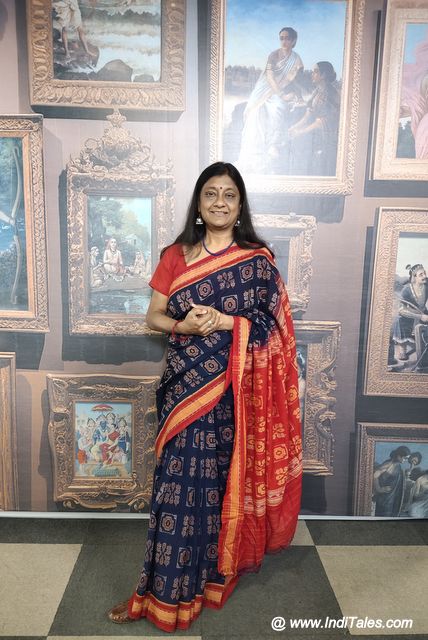
Odisha sarees are woven in both silk and cotton. Odisha silk sarees are known for their fine and lustrous beauty and are usually worn for special occasions and ceremonies. Cotton sarees of Odisha, though just as colorful and beautiful, are preferred for more informal occasions or daily wear because of the high level of comfort they offer. They are easy to drape and easy to handle.
Popular Handloom Sarees from Odisha
Bomkai or Sonepuri Saree – GI tagged
Bomkai sari, also known as Sonepuri Sari gets its name from Bomkai village in the Ganjam district. The weaving tradition goes back to the 8th century. The name comes from the Sanskrit words “Bom” meaning loom and “Kai” meaning hand, literally meaning handloom. The weaving tradition was nurtured by the Bhulia community of the Sonepur district. They wove finest sarees for their royal patrons – weaving legacy with artistic pride.
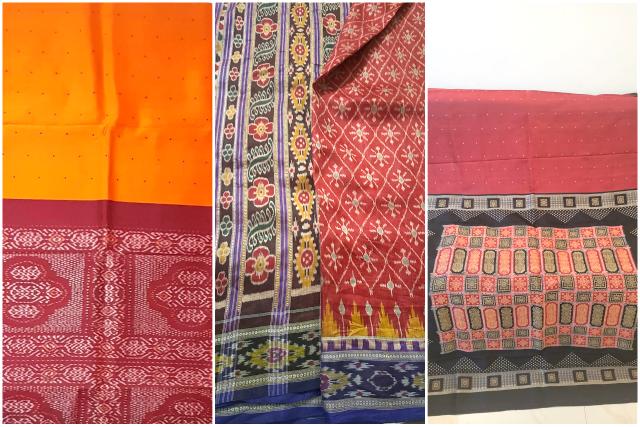
Bomkai sarees carry intricate extra weft threadwork on the border and pallu, incorporating tribal and geometric motifs. Motifs like chariots, dancing dolls, temple spires, Konark wheel, and flowers like lotus are woven skillfully using Dobi, Jaala and Jacquard techniques. Fishes and Rudraksha are often seen on borders as they represent auspiciousness.
Bomkai saree’s opulence shows on its pallu making them look grand, fit to be worn for special occasions like weddings and festivities. Body of the Sari is simple usually dyed with vegetable dyes in traditional red, black, and white background. Bomkai sarees use two tie and dye techniques: Ikat and Bandha. Weaving one Bomkai saree can take 12-14 days.
Sambalpuri or Bandhakala sarees – GI tagged
Sambalpuri sarees originate from the Sambalpur region comprising of Sambalpur, Bargarh, Balangir, Boudh and Sonepur districts. Known for their symmetrical patterns created using the Bandhakala Ikat technique, their threads are resist-dyed before weaving. The Ikat technique results in symmetric patterns that are nearly identical on both sides of the fabric. Traditional motifs like conch shells, wheels, and floral designs are popularly woven.
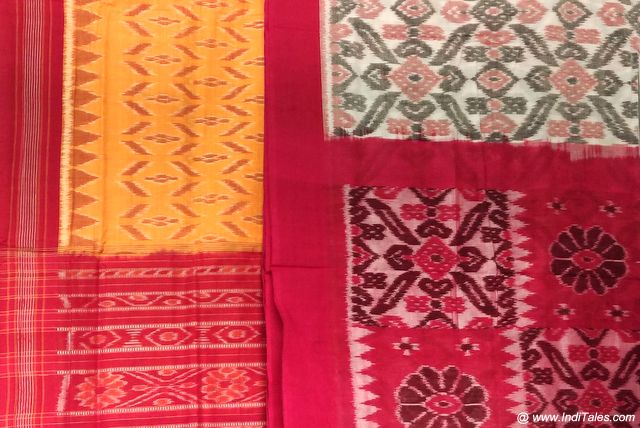
The stunning Sambalpuri Bandha handloom silk sarees come with many symbolic and spiritual motifs on the pallu. Soft cotton sarees are woven with high-count mercerized cotton.
Sambalpuri sarees also come in Bapta fabric where two different threads are woven in warp and weft- silk and cotton.
Berhampuri Paata – GI tagged, Handloom Sarees from Odisha
Berhampuri Patta is a GI product from the Silk City of Berhampur. Its history dates to the 14th CE Mohuri kings time who patronized this weave. Its unique aspect is that it comes with a matching ‘Joda’ for men.
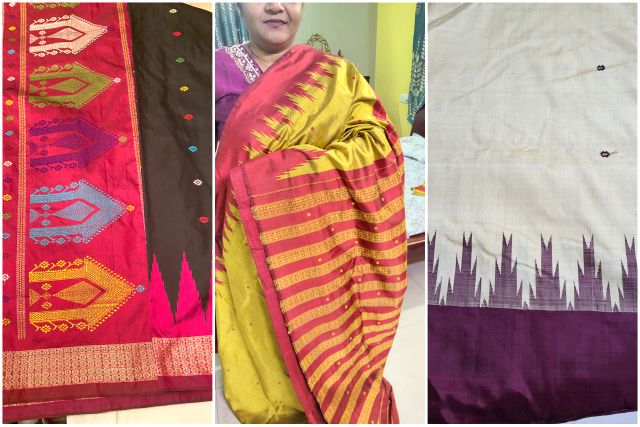
Berhampuri saree is known for its temple-shaped designs along the border and pallu. The temple design called Kumbha are of two types – Phoda or Badhi.
The saree also gets the honor of adorning the three Murtis of the Jagannath temple. It is draped around Sri Jagannath, Sri Balabhadra, and Devi Subhadra at Puri Jagannath temple.
Berhampuri sarees are worn at weddings and other auspicious occasions by Odia women.
Khandua Paata – GI tagged
Khandua Sarees, also known as Maniabandhi and Cuttaki, date back to the 12th CE. In Odia ‘Khandua’ refers to the cloth worn in the lower half of the body. Manufactured in Badamba and Tigiria blocks of Nuapatna in Cuttack district, Khandua is treated as ‘Pride of Odisha’.
It is a traditional hand-woven saree woven on wooden looms using pure tusser yarns. It is also popular for its Ikat or Bandha design and is commonly worn by women during the wedding. The traditional colors include orange, red and sunset yellow procured naturally from Sal trees. The borders and pallu are generally seen in black, blue, and red colors. The lightweight Khandua sarees feature festive motifs like auspicious elephants, many petalled flowers, a Deula kumbha and composite animal figure called Nabagunjara.
One type of the Khandua is the Nabakothi, meaning 9 kothis or boxes, which has all the nine auspicious motifs of – flowers, animals, conch, wheel, peacocks, betel leaves, and vessels.
Kenduli Khandua of 12 feet and 2 Kani, a kani being the length of one’s hand, is woven with texts and illustrations from Jayadeva’s famous Bhakti poem Gita Govinda. It is the fabric that Sri Jagannath wears closest to him.
Kotpad – GI tagged
Kotpad Sarees are vegetable-dyed fabric weaved by the tribal Mirgan community of Kotpad village of Koraput district was the first GI tagged weave of Odisha. These are usually cotton sarees with solid borders and Pata Anchal. The ingredients for the rich textures are Aul or Madder tree roots, Tussar silk and cotton yarns.
Woven mostly in black and maroon, these eco-friendly sarees are comfortable to wear both during summers and winters.The common motifs woven with the extra weft include axe, crab, bow, fish, temple, fan, conch, and boat, reflecting the culture of the sea. The sarees have elaborate borders and designs woven for special occasions.
Habaspuri – GI tagged
Habaspuri Saree from Kondha weavers of Chicheguda village in Kalahandi district. Gets its name from Habaspur village where it was originally woven in good old days.
The making of a Habaspuri is a time-consuming and painstaking process. The traditional patterns of Kumbha, fish and flowers are woven on the cotton saree.
Pasapali Handloom Sari
The Pasapali or Saktapar Sarees are a variant of Sambalpuri Sarees woven mainly in the Bargarh district. ’Pasapali’ comes from the word ‘pasa’ meaning dice used in board games. The design indeed looks like a chessboard with its chequered patterns in different color combinations but most popularly in red white and black – the three colors of three primary forms of Devi. You can also find them in saffron, blue and green colors when the weavers get creative.
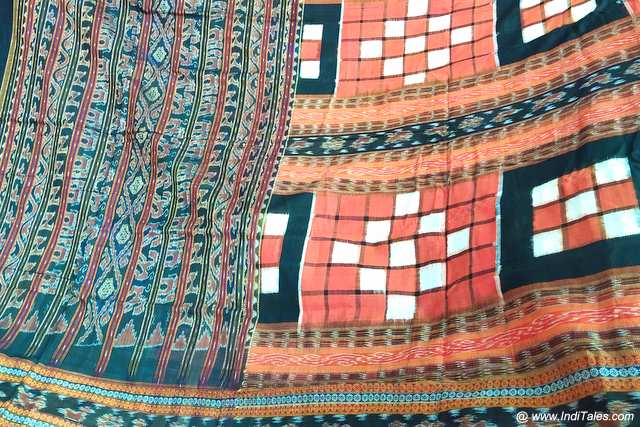
The pattern is woven using the double ikat weave with brocaded borders. Their unique design makes it stand out in the wardrobe in both silks as well as cotton. Personally, a Pasapalli Sari is a unique identity of Odisha handloom Saris.
Dongria Sarees
Dongria Sarees are woven by the Dongria Kondh tribe of the Niyamgiri Hills in the districts of Rayagada and Kalahandi. They are thick weaves in bright and vibrant colors with simple geometric designs on border and palla. Triangular patterns representing Niyamgiri hills and other motifs are inspired by flowers, fruits and water bodies of these hills.
Red, green, orange & yellow colors are inspired truly by mother earth.
Painted Pattachitra Saris, Handloom Sarees from Odisha
Pattachitra, a traditional cloth painting from Odisha is deeply associated with the Jagannath Temple in Puri. These paintings served as a medium to narrate tales of Hindu deities, especially Jagannath and are practiced in the village of Raghurajpur.
Pattachitra sarees use the same style to depict ancient stories on Sari anchals, converting each Sari into a personalized canvas. Themes revolve around stories from the Mahabharata and Ramayana, scenes from daily life in Odisha, thus telling stories of the land.
Creating a Pattachitra saree is a meticulous and labor-intensive process. You can get your favorite scene painted by the painters, but that demands some patience on your part.
Dolabedi Saree
A Dolabedi saree is a traditional handwoven silk saree named after the Dola Utsav – a festival where deities are taken on procession outside the temple walls. Dolabedi is a raised platform in temple compound with an arch where this festival takes place.
The patterns and colors of the saree symbolize the festive celebrations of Dola Utsava.
Dolabedi sarees are handwoven in villages like Gopalpur, Nuapatna, and Sambalpur in tussar and mulberry silk. A simple plain body contrasts with a vibrant and colourful pallu with intricate patterns depicting age old stories, festive chariots, auspicious symbols like triangles, dome shaped motifs, parrots, and turtles using extra weft weaving.
The combination of vibrant colors, intricate weaving, and storytelling makes the Dolabedi a regal and elegant Saree.
Gopalpur Tussar Sarees – GI tagged
Lustrous and rich with the waters of Brahmani River, these Sarees from Gopalpur village are made from Tussar Silk that comes from the cocoons of wild silkworms in Keonjhar and Mayurbhanj districts. This sustainable and eco-friendly option is also called Vanya silk. Natural dyes lend a soft, earthy palette to Sarees woven using Cut Shuttle Technique, creating a distinctive pattern and texture with traditional Odia motifs.
Best Places to buy Handloom Sarees from Odisha
Formal, informal, casual, or work wear, Odisha has a Sari for every occasion. For special occasions choose a silk Sari, for formal ones Tussar silk and for everyday use the soft cottons. Some of the popular places to buy Odisha Saris include Byonika and Utkalamrita. Both are expensive but trusted brands.
If you know of any reasonable local brands, do let is know in comments.



👍🏾 That was interesting about the handloom saree. Sadly, sarees are gradually getting replaced with Western attires in India.
Just one information, correct me if I am wrong.
“Bomkai” – kai is hand in Tamizh. And, as you mention – bom could be loom.
But “kai” could not be found in Apte’s Sanskrit English dictionary instead I found कर & हस्त.
More than the internet, I prefer to look up the dictionary when it comes to finding Sanskrit alternatives.
Perhaps, Bomkai could mean handloom in Odiya?
Excellent overview of Odisha’s stunning handloom sarees! The history, weaving techniques, and regional styles make these textiles truly unique. Great read!
Great guide to Odisha’s handloom sarees—informative, well-structured, and easy to explore. The article does a great job highlighting the rich heritage, unique weaving techniques, and regional diversity behind each saree style.
It’s fascinating how these weaves reflect cultural stories, traditions, and skilled craftsmanship passed down through generations. Similar insights are often seen through the work at Dealsshutter, and this was a thoughtful and engaging read. Thanks for sharing!
Wonderful article. Thank you so much for the information, and also the suggestion for where to look for them.