Matabari or the abode of the mother is how the Tripursundari temple is fondly known as in Tripura. Yes, the name of the Tripura state also comes from her name, making the whole state as her sacred form.
Tripursundari Mandir in Udaipur of Tripura is a shaktipeetha, where the fingers of the right feet of Sati fell. As per some accounts, the whole right foot fell here. Interestingly, the hill on which the temple is located is called Koorma Peetha and it is believed to be in the shape of a Koorma or a tortoise. The renovation efforts at the temple have also tried to give it a shape of tortoise although you will only be able to make it out in an aerial view. In Lalita Sahasranama, which is a stotra dedicated to Devi as Tripursundari, her feet are described like the back of a tortoise – Koorma Prishtha. I was very happy to see this literary reference being physically present at this temple.
Tripursundari or Tripureshi as she is also known in Tripura, is the third Mahavidya among the Dash Mahavidyas. She is a 16-year-old, ever youthful and benevolent Devi that gives both the pleasures of life and liberation after life. Her story comes in Brahmand Purana where she manifests to kill an asura called Bhandasura.
Remember Kamakhya temple is also dedicated to the same third Mahavidya with all the other Dash Mahavidyas surrounding her on the Nilanchal hill.
History of Matabari Tripura
The temple as it stands today, dates to early 15th CE when King Dhanya Manikya ruled the region from Udaipur. Devi appeared in his dream and asked him to worship on this hilltop, where there was a small temple dedicated to Vishnu already. Understanding that both Vishnu and Shakti are manifestations of Brahaman, he built the temple. This makes the temple 500+ year old, though the worship of Tripursundari must be older than that for the king to get her in dream.
Temple website attributes the present temple to Maharaja Radhakishore Manikya Bahadur, which would make it 120+ year old. The architecture does point to this time.
Visiting Matabari
As I walked up the staircase leading to the temple, it was surrounded by vendors selling Devi’s favorite red hibiscus flowers, items of Shringar and the famous Matabari Peda. Most pilgrims would typically buy these before climbing up the stairs.
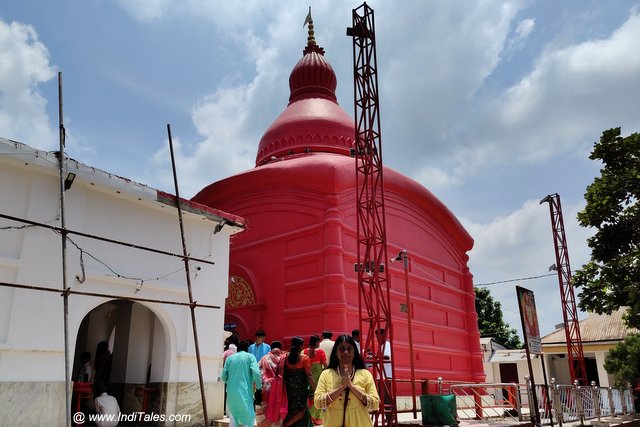
The temple in bright red color follows the typical architecture of the region. Garbh griha stands alone with square walls all around, about 25 square feet. The four corners have pillars carved making it look like a fort. The shikhara stands at 75 feet on top of a curvilinear Chala style roof. Seven golden kalasha or pots stand on of the shikhara and on top of them the yellow flag of Devi flutters.
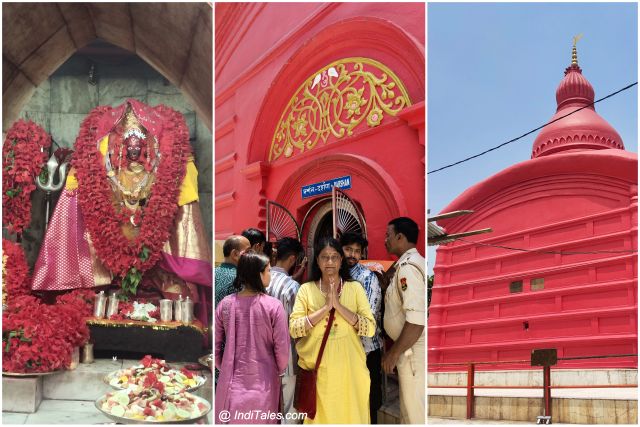
A narrow opening in the thick wall is where the priest enters to make offerings on behalf of devotees, who stand at the threshold and take darshan. Inside the Garbhagriha, there are two Murtis in black Kasti stone – one a life size one with beautiful eyes called Ma, and another a small replica of the big one called Chhoto Ma or younger/smaller mother. She has four arms and I was told she stands on Shiva, though it is not visible to the visitors.
The larger Murti captivates you with those compassionate eyes, and the smaller one teases you to look at it. Her powerful presence can be felt all around the temple. The smaller Murti is also sometimes believed to be that of Chandi. It is said that Chhoto Ma has accompanied the kings to wars and witnessed the wars.
Mandapa
Mandapa in pristine white color is fairly large compared to the temple and stands independent of the garbhagriha. One can sit here and meditate or chant. You can get the glimpses of the Devi as devotees move around. It feels as of she is listening to you, keeping an eye on you as she also attends all those who have come to meet her. I would remember chanting here for a long time.
Besides the main temple, there is another small temple dedicated to Shiva.
Across the temple, is Kalyan Sagar – the temple lake which is quite big, spread across 6-7 acres. It gets its name from Maharaja Kalyan Manikya who built this in mid-17th CE. You can see Koormas or turtles in this lake, living embodiment of Korrma Peetha, along with Matsya or fish, both also represent Vishnu. Pilgrims and tourists feed Marie biscuits to them, which I hope is replaced by something better.
Matabari Peda made of milk and sugar is offered to Devi along with other items of Shringar like Shanka pola, bangles, bindi, sari and flowers. The peda is very popular and in line to get its own GI tag. Almost everyone whom I told about my visit, wanted the Matabari peda from there – both as a blessing as well as a delicacy.
Festivals
Annual mela of Matabari takes place around Diwali, making me believe that she is a form of Mahalakshmi. Along with festive lighting, lots of cultural activities like singing, dancing and plays take place on the stages built for Mela. Lakhs of pilgrims converge to attend this mela. It is customary for locals, including tribals to offer their crops and milk produce to Devi first before consuming them.
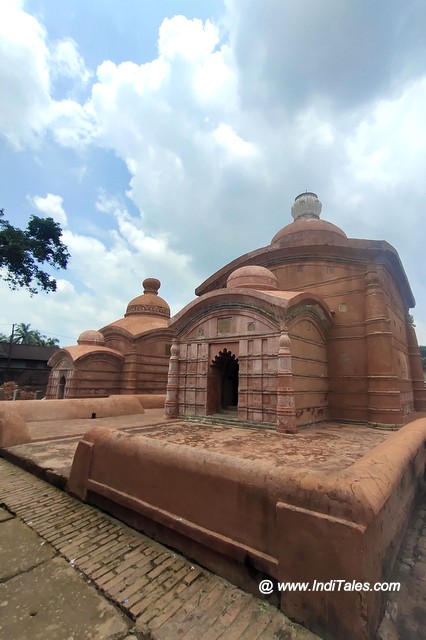
Bhairava Shrine is always associated with Devi temples, specially Shaktipeetha. At Matabari, it is located a little distance away. You see two old temples in red brick color which are not in practice, these were Chaturdash Devatas temples which have now moved closer to Agartala. You see a fairly recent temple where the Bhairava is worshipped in the form of a Linga.
Other places to see in Udaipur
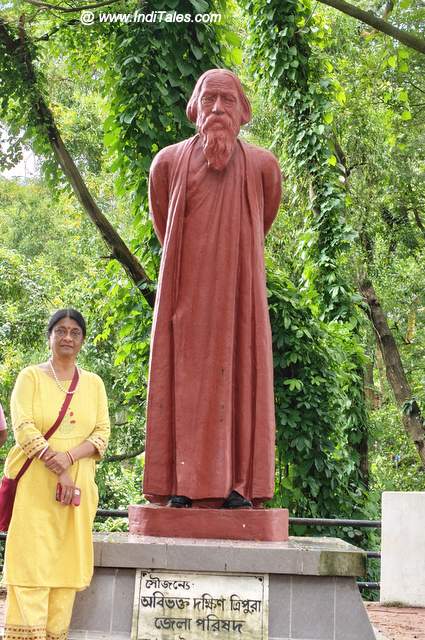
Old Rajbari is the old palace area located on top of another hill. You can only see from outside. It was closed when I visited it. Opposite this there is a statue of Gurudev Rabindranath Tagore who had visited Udaipur and written about Bhubaneshwari temple.
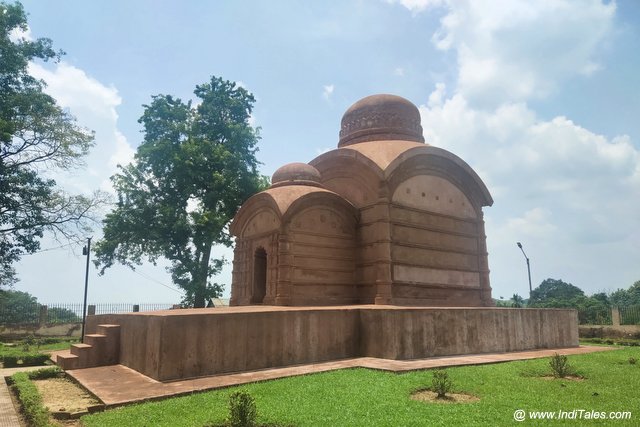
Bhubaneshwari temple is located close to Old Rajbari. The old temple in brick color stands on a tall Jagati or pedestal but is not practicing as of now. The temple operates in a small temple opposite this temple in a ground that now works as parking lot. I wonder why the beautiful temple is not active. No one could answer me.
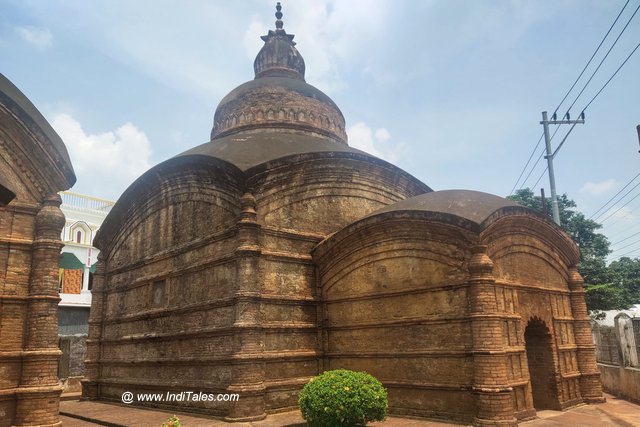
On the way to old Rajbari is Gunabati group of temples, attributed to queen Gunabati, wife of Govinda Manikya who ruled in late 17th CE. The three temples are like Matabari except that they have a small mukha mandapa attached to them. As per the inscriptions, the main temple was dedicated to Vishnu.
Neel Mahal Palace is a water palace located few kilometers away. It needs couple of hours to explore with a boat trip.
Travel Tips for Matabari
Udaipur is about 55 km from Agartala, which is well connected by air, train and road.
You get good vegetarian food around temple, along with street food and Matabari Peda.
Temple is open from early morning to evening Sandhya Arti. It closes in between for different rituals and you must wait for it to open.
Early morning 5 devotees are allowed inside the sanctum, but you need to book it in advance. This requires you to follow dress code.
Miniature version of Matabari is available in all souvenir shops in Tripura, mostly in bamboo.