



Panch Prayag are the five Sacred River Confluences in the Garhwal Himalayas that eventually become holiest of the rivers – Ganga. This Ganga nurtures the vast plains of India, no wonder revered as the mother.
After the Triveni Sangam at Prayagraj, these five prayags hold the highest sanctity. They mark the points where the mighty Alaknanda River meets its tributaries, gradually transforming into Ganga. Pilgrims believe that bathing in these waters purifies them, washes away their sins, and brings them closer to moksha and their real self.
These confluences lie along the route to Badrinath, one of the Char Dham shrines, making them an integral part of the pilgrimage circuit in Dev Bhoomi Uttarakhand. In descending order, from highest altitude to lowest, the Panch Prayag are: Vishnuprayag, Nandaprayag, Karnaprayag, Rudraprayag, and Devprayag.
Etymology of Prayag
Prayag literally means the earliest or the supreme place of performing Yagnas. No wonder that each of these places, where the two sacred rivers meet have been places of Tapasya for devatas, rishis and kings. They must have performed yagnas here.
Confluences, coming together of two independent entities to become one is always sacred in India. This is the reason; these places hold big melas like Kumbh Melas bringing people from across the land together.
Story of Panch Prayag
It is said that Ganga had to descend on earth, her flow was too strong for the earth to bear it. So, Shiva took her in his Jata or hair locks and just allowed a few small streams to fall on earth. These streams flow down and keep joining each other at different points to finally meet at Dev Prayag.
This is why Ganga gets her name at Dev Prayag.
Panch Prayag In Uttarakhand
Vishnuprayag – The First Prayag
The first and the highest of the Panch Prayag is Vishnu Prayag. This is where the Dhauli Ganga River merges with the Alaknanda coming from Badrinath. Dhauli Ganga emerges from the Niti Pass near the Indo-Tibet border. Alaknanda originates from Satopanth glacier on the eastern slopes of Chaukhamba hills.
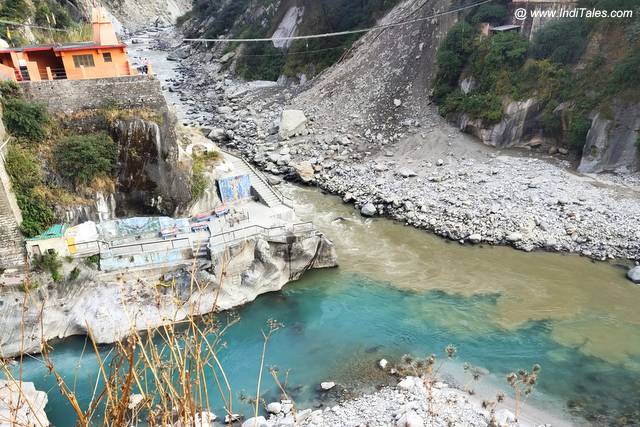
I remember the two distinct colors of water coming together. They continue to flow with their own identity for some time but slowly merge into each other and becoming one – indistinguishable from each other. To me this looked like a great metaphor of marriage, two people from different origins coming together, walking together until they become one in a way that you can’t separate one from the other.
Near Mana village, a little ahead of Badrinath, is the confluence of Alaknanda and Saraswati River. It is called Keshava Prayag. Famous caves like Ganesh Gufa and Vyasa Gufa are located close by. Even the famous Bhima Pul is here at Keshava Prayag.
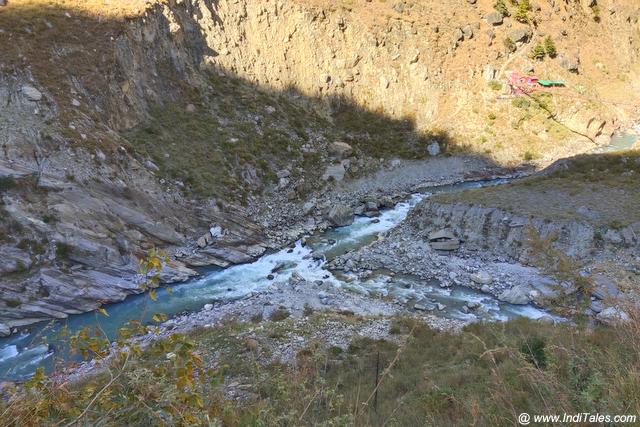
Near Raini village in Taopvan area, Rishi Ganga merges with Dhauli Ganga creating Rishi Prayag. If you count these two prayags, the count of confluences becomes 7. I am sure there are many more that I did not get to see.
Vishnuprayag is located about 12 kms from Joshimath at about 1,372 meters altitude. You can see it on way to Badrinath from Joshimath. It is named after Sri Vishnu, as Alaknanda is coming from the feet of Vishnu at Badrinath. Remember one of the names of Ganga is Vishnupadi – the one flowing from the feet of Vishnu.
Legend says Narada Muni meditated here at Vishnu Prayag and received divine blessings from Vishnu. Though there is no major town here, an ancient Vishnu temple stands nearby, offering serene views of the roaring rivers against snow-capped peaks. There is a Vishnu Kund close to the temple.
Nandaprayag – Confluence of Joy
Further downstream, about 20 kms from Chamoli town, the 105 km long Nandakini River coming from Nanda Ghunti peaks joins the Alaknanda at Nandaprayag at an altitude of 1354 meters. Nandakini also gets its name from Nanda Devi peak.
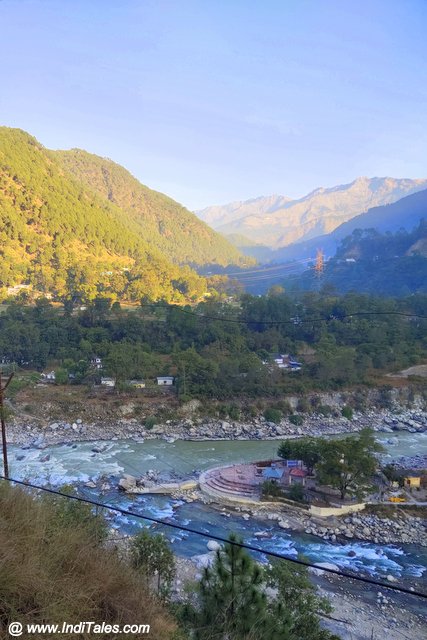
This confluence gets its name from Nanda Raja of Braj. It is believed that both the parents of Sri Krishna – Vasudev-Devaki and Nanda-Yashoda performed Tapasya here to get a son, and Vishnu took the form of Krishna to be as their son.
It is also the Tapasthali of Rishi Kanva, the foster father of Shakuntala. This place is also identified as the place where wedding of Shakuntala-Dushayant took place. Although there is another Kanva Ashram on the banks of Malini River.
This confluence is home to the beautiful Gopalji Temple dedicated to Sri Krishna as an infant. The calm surroundings and lush valleys make it a peaceful stop for pilgrims.
Karnaprayag: The Mahabharata Connection
Karnaprayag located at an altitude of 850 m, is home to the Pindar River coming from the Pindari Glacier in Kumaon, merging with the Alaknanda. Named after Karna from the Mahabharata, it is believed that he performed severe Tapasya here to please Surya, who was his father. As per other stories, his last rites were performed here by Sri Krishna himself.
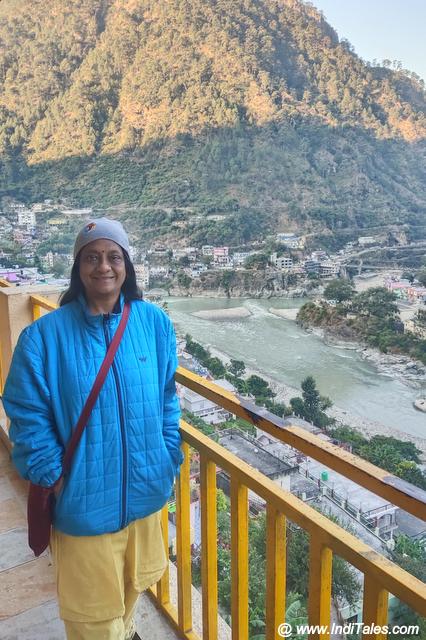
Swami Vivekananda meditated at Karnaprayag.
You can visit the temples dedicated to Karna and Uma Devi at this confluence.
Karnaprayag is a major town located on either side of the confluence. Many hotels also give you a lovely view of the sangam. It would soon be connected by Indian Railways.
Rudraprayag: Where Narada prayed to Shiva
Rudraprayag marks the union of the Mandakini descending from Chorabari glacier near Kedarnath and Alaknanda descending from Badrinath at an altitude of 890 m. Named after Lord Shiva’s Rudra avatar, it is believed Narada Muni meditated here to learn music from Shiva. Narad Shila here commemorates that incident.
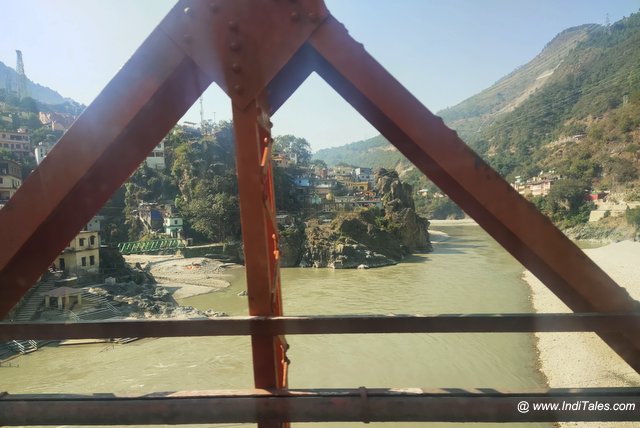
Rudraprayag is also known for shooting of Leopard that killed 125 people by Jim Corbett.
Rudranath and Koteshwar Mahadev temples here see a sea of devotees. Dhari Devi temple is also located close by.
Rudraprayag town also serves as a gateway to Kedarnath. It is also a district headquarter and a major market of the region.
Devprayag: Birth of the Ganga
The most iconic of Panch Prayag is at Devprayag in Tehri district at an 830 m elevation. This is where the Bhagirathi coming from Gaumukh at Gangotri and Alaknanda finally unite to become the Ganga. The distinct colors—greenish Bhagirathi and bluish Alaknanda—create a mesmerizing sight.
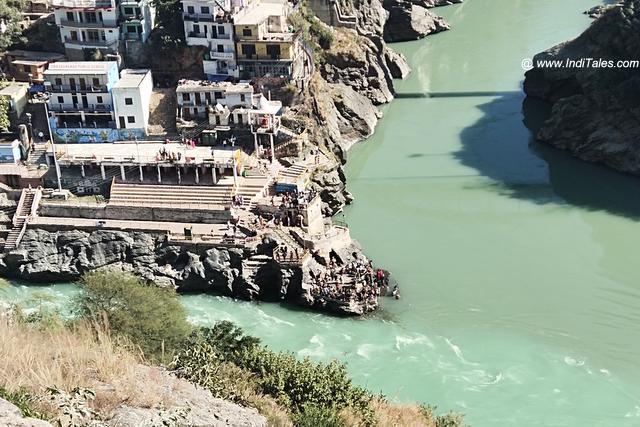
You can trek down to the ancient Raghunathji Temple where it is believed that both Dashrath and Sri Ram performed tapasya. It is considered the official source of the sacred Ganga that flows to the plains via Haridwar. An ancient observatory called Nakshatra Vedshala is also located at a peak closeby.
In fact, one of the names of Haridwar is Gangadwar – a door through which the Ganga moves from mountains to the plains, from the land of devatas to the land of humans. This Ganga will travel a long distance to meet the Yamuna and Saraswati at Prayagraj – the king among the Tirthas.
As per a local legend Devprayag is also called Saas Bahu ka Sangam, as Bhagirathi is very bubbling and joyous while Alaknanda is very quiet and peaceful. I could not figure out which river is mother-in-law and which one the daughter-in-law, and no one could answer it. I assumed Bhagirathi is youthful so she must be the Bahu but others thought the peaceful one must be the Bahu. Well, let us leave it to your interpretation.
Spiritual Significance and Pilgrimage
The Panch Prayag symbolize divine union and purification. Many pilgrims take a dip at these confluences before visiting Badrinath. It is a tradition to take a dip here during Makar Sankranti and Basant Panchami festivals. However, check with local authorities before you do so as rivers can be ferocious at times.
The best time to visit is April-June or September-November, avoiding monsoons and heavy winters.
All the Panch Prayag are accessible via the Rishikesh-Badrinath highway, with Devprayag closest to Rishikesh at about 70 km. Whether you are on a Char Dham Yatra or seeking Himalayan serenity, the Panch Prayag offer a profound blend of devotion, stories, and natural beauty— following the journey of Ma Ganga.
What is intriguing is that, all the five or rather seven prayagas look very similar. The two rivers coming from different directions cut through the rocks forming a triangle at their meeting point. Most of the times, you can see the two streams distinctly – distinct in colour, in speed, in flow and in enthusiasm. They flow together side by side slowly merging to become one.
You can do Panch Badri yatra too along with Panch Prayag.
All these being on the Char Dham Yatra path have ample accommodation and food options close to them.


This blog is a great resource for anyone looking to learn more about the topic.
जय गङा मैया! 🚩