

The sacred Hari Parvat Parikrama in Kashmir, around Srinagar in Kashmir, is a lesser known parikrama that not many know about. I came across it while researching for the book ‘Navaratri – When Devi Comes Home,’ where Dr. Subhash Kak talked about this special pilgrimage in Kashmir.
To learn about this special journey, I talked to Rashnik Ji, who is from Kashmir, and his father Autar Krishen Ji. Even though they now live outside Kashmir, they fondly remember doing this parikrama when they were kids. The memories of this pilgrimage are like a precious treasure for them, and they kindly shared their knowledge for this article.
Origin of Kashmir
The origin of Kashmir is closely connected to a lake called Satisar, representing Shiva’s energy. It is believed that initially, the whole valley was a lake and when respected sages and gurus chose to live there, they had to drain parts of the lake for habitation. Then, Balbadra, Krishna’s elder brother, played a vital role by redirecting the water flow. This made the Kashmir valley. It has fast-flowing water that still flows today.
They mentioned that Kashmir was once called “resh vaer” in the local language, meaning “Garden of Saints.” People believed it was a special place where holy people like saints and spiritual leaders lived.
Story of Jala Udbhav Asura
Rashik ji shared a tale from Kashmir: Long ago, an asura named Jala Udbhav wreaked havoc by disturbing prayers of Rishis and desecrating their sacred sites. Concerned saints sought help from Lord Vishnu, forging a bond between the deity and Kashmir’s first king.
In response, Lord Vishnu called upon his consort, Lakshmi. She transformed into Sharika or Maina, clutching a small pebble in her beak and dropping it on Jala Udbhav, plunging him into the water and restoring peace.
Hari Parvat formation
The spot where this incident happened became known as Hari Parvat. Interestingly, the pebble or hill adorns a natural Shri Chakras on its surface. The main stone, worshiped today, naturally bears a Shri Yantra, symbolizing the divine presence of Lakshmi and her victory over the Asura. And so, the sacred connection between the Rishis, Lord Vishnu, and the protective intervention of Lakshmi unfolded in the magical land of Kashmir.
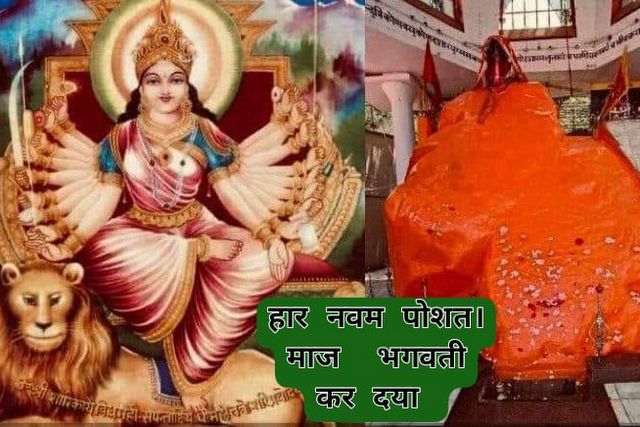
Hari Parvat is the home of Mahashakti, the Divine Mother known as Jagadamba Sharika Bhagwati or Maha Tripursundhari. Also called Rajrajeshwari or “Harie” locally, the eighteen-armed Goddess Sharika is the presiding or Adhishtatri-Devi of Srinagar city. Her shrine features a self-manifested Srichakra, known as Mahashriyantra, with circular and triangular patterns and a central dot.
Srinagar, the capital city of Kashmir, got its name from Devi’s Srichakra.
Hari Parvat Parikrama
Now, let us explore the Hari Parvat Parikrama, a circumambulation that goes around the sacred hill.
Srinagar is divided into two broad parts, Kathi Darwaza and Sanghi Darwaza are thetwo grand gates of Hari Parvat. These gates are monumental, and can allow the passage of two to three elephants simultaneously.
The parikrama starts at the Lord Ganesha shrine on the southwest corner of Hari Parvat. Along the way, you will pass temples dedicated to Saptrishi and the Goddess Kali shrine with her eight Bhairavas.
After that there is a big open space called Devi Angan. This is the cosmic playground of the Devi. You will also see the Sthapana of Hari represented by a rock on the northeast face of the hill.
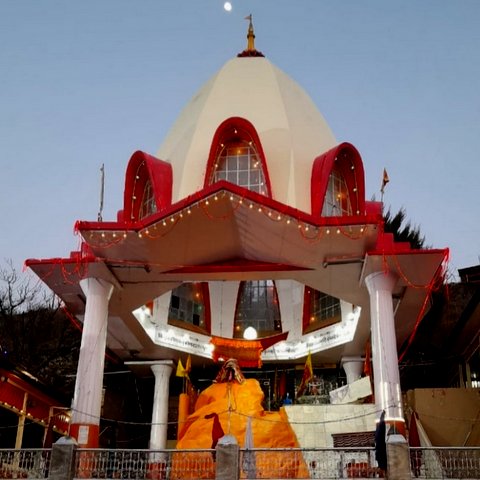
Nearby, you will see Amber Koul temple and Devi Mahalaxmi temple. Also, there is the shrine of Lord Vamadev, Sathopa temple, and Devi Reghnya’s consort shrine.
Finally, you will reach a small Hanuman temple on the right side of the foothill, and the parikrama ends at Kathi Darwaza.
The parikrama, is approximately three kilometers long, takes around one to one and a half hours and is not excessively steep.
Read More – 10th CE Kashmir and its illustrious queens
The temples on the path represent different gods like Ganesh, Shiva, and Devi in her three forms: Lakshmi, Durga/Kali, and Saraswati. I think this sacred journey truly embodies Hindu spirituality and acts as a pilgrimage (Teertha), especially with three devi temples along the route.
Festivals of Kashmir
Krishna ji recalls that during his youth, many people did the parikrama every day, no matter the weather. It was a special feeling of spiritual devotion, and being together as a community.
During Navratri, dvotees celebrate the triumph of Devi Sharika over Jala Udbhav. Navatratri marks the start of the Hindu calendar in Kashmir on Chaitra Pratipada, making it a big event in the region.
Sharika is highly revered Devi in the Kashmir Valley. Even the famous Amarnath Yatra starts with her darshan.
He says that they used to celebrate three significant days – Navaratri, Hora-Ashtami, and Aashad Navami in the foothills.
People used to go to Hari Parvat often to worship the Supreme Devi. They would come to the Shrine of Chakreshwari (Sharika Devi) early in the morning to be near the Divine Mother.
Phagun Krishna Paksh Ashtami called Hora Ashtami and Ashad Shukla Paksh Saptami, Ashtami, and Navami or Har Satum, Har Aatham, and Har Navum are the auspicious days for congregational prayers at the Sharika-peeth Chakreshwari temple.
Ashadh Navami, also called Har Navum, marks the Jayanti or birthday of Sharika Bhagwati. On this day, known as Sharika Jayanti, devotees offer sacrificial offerings of ‘Teher-charvan’ – rice boiled with turmeric powder, mixed with oil and salt, and cooked liver of goat, to the Supreme Goddess, a ritual locally referred to as ‘Chout Kharoun’.
During ‘Navreh’ – the New Year Day of Kashmiri Pandits, in Magh month and during ‘Navratra’, devotees regularly visit Hari Parvat to worship.
Also, Saturdays were dedicated to congregations and celebrations. He remembers sharing tea and kashmiri rotis upon reaching the hills. It was a fond memory for him.
Rupa Bhawani
Rupa Bhawani is considered to be the living human embodiment of Sharika Devi.
Mata Rupa Bhawani was a poet from Kashmir who is considered a saint and lived in the 17th century Kashmir. Although her physical presence is no longer there, her legacy is preserved in various places like Chashme Shahi and Safa Kadal.
Current Challenges of Hari Parvat Parikrama
Due to the mass migration of Hindus from the valley in the 1990s, Hari Parvat has seen a decline in visitors. In today’s environment, outsiders find it challenging to complete the Hari Parvat Parikrama due to ongoing political tensions.
The landscape was once devoid of residential houses. It is now full of local homes making the parikrama route difficult. While some temples stand tall, others need preservation efforts. Rashnik ji and his father regret that amidst the current turmoil in Kashmir, this sacred location gets overlooked in terms of visits by devotees and daily prayers.
However, reviving the Hari Parvat Parikrama could reconnect us with ancient traditions. It will help enrich our understanding of Kashmir’s spiritual legacy. This Hari Parvat parikrama needs preservation and revival. Hopefully, we can revive it someday and make it accessible for those seeking to receive the blessings of Maa Sharika.
Transcribed by Sushri Shashi Pandey